Friday, April 15, 2016

The Affair (Jack Reacher) 2011 by Lee Child


One of the reasons I like Jack Reacher is that I don’t know any other man who wanders the face of the earth with only a bank card and a toothbrush. When I first made his acquaintance in Bad Luck and Trouble, I couldn’t believe that such a person could actually exist in today’s world. Thanks to Lee Child, Reacher’s creator, we come to believe in this man: former military policeman, weighing 250 pounds and standing 6 foot 5, with a 18-inch neck and a 37-inch sleeve. The appeal of having no possessions reverberates for me through each and every one of the 16 novels we’ve had in this terrific genre series so far. There’s nobody like Jack Reacher, and all of his fans know that.
He’s now 50, which is hard to believe, but we have to believe it because this latest instalment, The Affair, takes him back to 1997, and he was 36 then. He’s still a military policeman, and this plot marks one of the last things he does as an MP. “Thing” being a little task set for him by his superior, General Leon Garber, and the mysterious forces at work in the Pentagon.
The world changed for Jack Reacher four years after the events recounted in The Affair: Sept. 11, 2001. He uses it as a kind of dating system for what he considers to be the world’s plunge into total nihilism. Reacher’s world is created by Child, an expatriate Brit and former television director, who captures exquisitely the cadence of American speech, the frightening isolation of its small towns and the weirdness of its political extremes.
I have a predilection for writers who do not use adverbs, and you can go for 20 pages in a Jack Reacher novel and not find a single adverb. The style complements a spare, hard hero with a great ability to tell the good guys from the bad.
Those with delicate stomachs need to know that in this novel he kills four people, two with his bare hands and two by shooting them. He is also a great expert on weaponry. His favourite is the Glock handgun, the abilities of which are described with such love and detail that I almost feel that I could pick one up and use it myself. In The Affair, he uses a Beretta and a stolen antique Winchester 73 rifle, even though it is more than a metre long and he has to carry it upright through miles of bush.
I have a fondness for the loner in my fictional other life: the man with no name in Sergio Leone westerns, Shane and Hondo. I like people who ride in from the East and go out to the West. In a loopy adolescent way, I always thought that a stranger on a horse would arrive while I was reading in the library and hang a sequined moon over us before we rode off together into the painted sunset.
The appeal of Jack Reacher is that he has nothing and wants nothing. He will always say goodbye. And those of us who live secure, middle-class lives with warm relationships can fantasize about having nothing and not knowing where you’re going next after you hitchhike to the next destination.
This time, Reacher fetches up in a small town in Mississippi, located near a large military base, and helps the local sheriff, Elizabeth Deveraux, unravel a mystery involving the killing of several beautiful young women, one of whom has her blood drained out of her by being hung by her feet.
These novels aren’t for the faint of heart, but if you’ve read some of Thomas Harris’s Hannibal Lecter novels, you’re prepared. If I have any quibble about this novel, it is that Reacher spends more than two paragraphs with one of the women in the book and develops what could even be called a sort of a relationship. It’s not that I am jealous. I just feel apprehensive that this kind of thing is going to attach him to the world and I don’t want him to be attached. I want him to continue walking down those unused railways and dark roads. I want him to be able to hotwire a car and take out a mean drug dealer by cornering him against the back of a concrete building, throwing the door open at the last minute to slam him against the wall and then take the money and pay back all of the rat’s suffering victims.
How can Jack Reacher do that if he develops emotional relationships with women? I do think it’s wonderful that he appreciates feminine beauty and I take it for granted that women are beautiful when he describes them as “spectacular” and that they are heroines when he says they are. I trust Jack Reacher.
His mother was French. He went to West Point. We sense in him a deep sophistication: When he throws off a remark about not fighting a battle being the greatest victory of all, most of his devoted following will realize it’s a paraphrase of the great military strategist Sun Tzu. He wears his knowledge lightly and expects you to accept it.
Words aren’t always what Jack Reacher uses. Confronted by a group of bullies he says: “I took a breath and made like I was going to speak. Then I head butted the guy full in the face. No warning. I just braced my feet and snapped forward from the waist and crashed my forehead into his nose. Bang. Timing, force, impact, it was all there in full measure. Plus surprise. No one expects a head butt. Humans don’t hit things with their heads. Some inbuilt atavistic instinct says so. A head butt changes the game. It adds a kind of unhinged savagery to the mix. An unprovoked head butt is like bringing a sawed-off shotgun to a knife fight.”
Or another time: “Both men looked right at me, with a kind of smug, low wattage insolence some kinds of strangers get, in some kinds of bars. I looked right back at them. I’m not that kind of stranger. The driver said, ‘Who are you and where are you going?’ I said nothing. I’m good at saying nothing. I don’t like talking. I could go the rest of my life without saying another word if I had to. I didn’t want to have to hit the guy. Not with my hands. I’m no hygiene freak, but even so with a guy like that I would feel the need to wash up afterward, with good soap, especially if there was pie in my future. So I planned on kicking him instead.”
There is anxiety through this story that the honour of the army might be stained or that the heroic local sheriff might be implicated; there has to be a choice between the two. This is all played out in masterful choreography. And, of course, it leaves Reacher saying goodbye to the beautiful woman, who asks him to drop by any time he happens to be in the neighbourhood, and him lying that he will. Then he picks a road at random, puts one foot on the curb and one in the traffic lane and sticks out his thumb. We’re sure to be meeting him on the road again.

The Mermaid Chair (2002) by Sun Monk Kidd


The Mermaid Chair

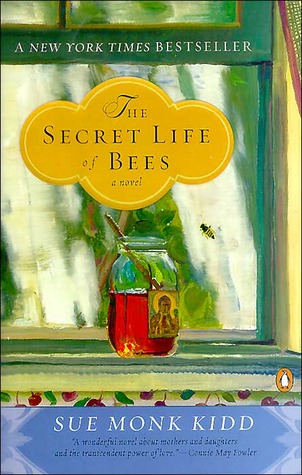
Sue Monk Kidd's phenomenal debut, The Secret Life of Bees, became a runaway bestseller that is still on the New York Times bestseller list more than two years after its paperback publication. Now, in her luminous new novel, Kidd has woven a transcendent tale that will thrill her legion of fans. Telling the story of Jessie Sullivan -- a love story between a woman and a monk, a woman and her husband, and ultimately a woman and her own soul -- Kidd charts a journey of awakening and self-discovery illuminated with a brilliance .

The secret life of bees (2002) by Sue Monk Kidd

37435
 
Set in South Carolina in 1964, The Secret Life of Bees tells the story of Lily Owens, whose life has been shaped around the blurred memory of the afternoon her mother was killed. When Lily's fierce-hearted black "stand-in mother," Rosaleen, insults three of the deepest racists in town, Lily decides to spring them both free. They escape to Tiburon, South Carolina--a town that holds the secret to her mother's past. Taken in by an eccentric trio of black beekeeping sisters, Lily is introduced to their mesmerizing world of bees and honey, and the Black Madonna. This is a remarkable novel about divine female power, a story women will share and pass on to their daughters for years to come.  

Sunday, September 20, 2015

The sketeton road (2014) by Val McDermid

Before reading this novel, a primer on the Yugoslavian War (1991-2001) may be necessary. The author heavily relies on the events of this turbulent time as a backdrop for  murder. A building inspector finds a skeleton in the turret of a Victorian Gothic building.  A bullet had pieced the skull. Cold Case detective Karen Pirie used forensic science to determine the identity of the man.  He was a Croatian general who left the Balkans to marry Maggie Blake, an Oxford professor of anthropology who met him while on studies in Serbia.

Research in the field and the was crimes tribunal reveals that he had committed the atrocity of killing over 40 people in retaliation for the deaths of his wife an sons. A mutual friend of Maggie and the general discovered the truth. Maggie had to find the truth, along with Detective Pririe, who experienced her own loss due to male aggression.

The murder of Harriet Krohn (2004 Eng trans 2014) by Karin Fossum

The narrative is told by the murderer, Charlo Trop, and it is from his letters and remembrances that the reader sees the self-absorption and hopelessness of Charlo's character.  He is a compulsive gambler whose wife kept it all together, but with her death his behaviour deteriorates.  Stealing from his job as a car salesman gets him fired.  Then he borrows lots of money from friends, whom he does not repay.  His 17 year old daughter does not trust him and is beginning to carve out her own life. He determines to rob a woman he knows from a coffee shop.  The burglary goes band and in his inner conflict results in serious violence which kills her.  With her money he tries to rehabilitate himself, paying off his debts and buying his daughter a horse.  She begins to thaw and develop a new relationship with her father, but the long arm of the law is working overtime.  Inspector Karl Sojer brings him in for questioning several times before an arrest is made. The myriad of lies Charlo tells seals his fate.

Friday, August 21, 2015

Outrage (2008) by Arnaldur Indridason

Translated from the Swedish 2011

The murder victim rapes using a date-rape drug on his unsuspecting 'hook-ups'.  He, however, his found murdered (throat slit) in his home.  The woman he raped is accused and then her father is also help responsible, yet both are innocent, in spite of intense police interrogation. Yet this murder is linked to other crimes of rape and missing persons.  let's not omit two suicides also connected to the murdered man.  Connections to the man's rural home are made. This village is a place where secrets are held for generations.  All the while, the police officer must reconcile her police work with her family responsibilities. Not an easy task.

River road (2014) by Jayne Ann Krentz

Thirteen years after a wild high school party, Lucy returns to her home in Summer River (can you believe this name?) to dispose of her aunt's estate.  She finds a body buried under fireplace tiles which leads to a murder investigation. A hedge fund and winery are also involved, as are several sketchy characters who had attended the party years ago. Mason, an ex-cop, who now has a surveillance business helps Lucy with the investigation.  The chemistry between him and Lucy beomes obvious to one another as they try to solve the mystery.  Watch out for Becky, the wine maker.

Mediocre but Krentz writes well enough to allow the reader to pass the time pleasantly.

Moody bitches (2015) by Dr. Julie Holland

Psychiatrist Julie Holland examines the medical and social treatment of women and their health.  She examines prescribed drugs to treat many issues, such as diet, sleep, PMS, menopause. She also discuses sexual relationships and society's reaction to women and sex.  There is also examination of love, relationships, hormones, and diet.

I actually bought this book rather than wait in line at the library.

Lifetime (2007) by Liza Marklund

Translated from the Swedish 2013

A newspaper reporter's house burns down the same evening her husband leaves for another woman.  She and her two children get out, but she must start over. Her detective skills enable her to solve the case of a beloved police officer, who has been shot dead.  His wife is accused and her cop girl friends hold fast to their belief in the wife's quilt.  Curiously the 4 yar old son is missing and the wife also accused with his disappearance.  A peculiar cast of characters are presented and the conclusion is awkward.  I enjoyed this one.

Reichs, Kathy; Boyd, Patti; Grisham, John; Fossum, Karin

In the darkness by Karin Fossum (1995) (2012 Translated from Swedish to English)

The litigators by John Grisham

Wonderful life by Patti Boyd - ebook

Bones never lie by Kathy Reichs (2014)

Black skies (2009) by Indridason, Arnaldur Eng trans 2012

Slow, slow, slow.

A swingers' group become connected to a murder through four young bankers involved in a schme to launder money. Detective Sigurdur Oli (who hates being called 'Siggi') has his relationship with his girlfriend fail while trying to solve the murder of a woman who participated in the club.  Sigurdur discovers that a personal friend and sister-in-law have an involvement with the swingers.  Lots of side stories. glacier trips, and issues surrounding child pornography, which come to light with a young street man who wants to talk.

Tuesday, June 23, 2015

Hoffman, Cohen, Fielding, Sjowell, Lowry, Lam, Koskoff

The museum of extraordinary things  by Alice Hoffman

The break-in  by  Tish Cohen

Puppet  by Joy Fielding

Blue diary  by Alice Hofman

Roseanna  by Maj Sjowell

Gathering blue   by Lois Lowry

The Headmaster's wager  by Vincent Lam

Art deco of th Palm Beaches  by Sharon Koskoff

Saturday, May 2, 2015

A girl on a train (2013) by Paula Hawkins

22754100
 

Book review from the Globe and Mail
by


Before it became the bestselling novel in Canada – a publishing juggernaut that has burned through seven printings in fewer weeks than that – The Girl on the Train was an unread e-mail waiting in Kristin Cochrane’s inbox. It was July, 2013, and the e-mail was from the publisher at Transworld, Britain’s largest fiction publisher. They had just acquired world English-language rights to a book they thought Cochrane, Random House of Canada’s president and publisher, might be interested in, though calling it a “book” is generous: At the time, The Girl on the Train consisted of roughly 45,000 words and an outline detailing the rest of the novel. Cochrane shared the submission with several colleagues and, by the end of the month, had signed Paula Hawkins, a financial-journalist-turned-author who had never published a novel under her own name, to a two-book deal.

That might be an understatement. Despite going on sale Jan. 6, there are already more than 135,000 copies of The Girl on the Train in print in Canada, and the novel has topped the fiction bestseller list in this newspaper for the past four weeks. (This doesn’t include e-book sales of more than 10,000 copies.) It is only February, but the novel – a riveting study of voyeurism and a lesson on why appearances are often deceiving, told by a trio of unreliable narrators – might just end up being the blockbuster of 2015. The book’s reception, says Cochrane, is “unlike anything we’ve seen in a long time.” Even Stephen King has done his part, recently tweeting that the novel “[k]ept me up most of the night” – the accolade that seems to have impressed Hawkins the most.
“I was taking pictures of the screen and sending it to everyone I know,” says Hawkins, who was in Toronto on Super Bowl Sunday as part of a two-week North American tour. (The novel is doing brisk business in the United States as well, with a reported 500,000 copies in print and film rights already snapped up.)
All this for a novel Hawkins, 42, describes as “the last roll of the dice.”
She was at a crossroads. A career journalist who turned to fiction at the suggestion of her literary agent (she’d also published a financial guide for women, The Money Goddess, in 2006), the Zimbabwe-born, London-based Hawkins wrote four works of commercial women’s fiction between 2009 and 2013 under the pen name Amy Silver: Confessions of a Reluctant Recessionista, All I Want for Christmas, One Minute to Midnight and The Reunion.
“Three of those books had done fine,” she says. “The last one just sank without a trace.”
So she began a new novel, this one a thriller. It was centred on a woman “rendered unreliable by her problems with drink,” a character who’d been floating around in her brain for several years. (Hawkins started – and abandoned – several thrillers while in her 20s and 30s: “Those are all sitting on a hard drive somewhere,” she says. “I should go back and look at them.”) It is uncommon for agents to submit a partial manuscript to a publisher unless the author has a proven track record, but Hawkins was rather impatient. “It wasn’t a perfect way to do this,” she says. “To be perfectly frank with you, I was broke and I couldn’t afford to wait until I finished the book to get a deal. I needed some sort of income, and my agent thought the first half was very strong.”
Another understatement. The novel’s opening chapters barrel forward like an express train. A Rashomon-like narrative, it tells the story of Rachel, a thirtysomething alcoholic who wishes she was living a life other than her own. Each day she commutes from the suburbs into London, and each day her train stops at a crossing, where, for a brief moment – a minute, maybe two – she can see into the backyard of a house belonging to a young couple she’s nicknamed Jess and Jason, who seemingly possess everything missing from her own life. One morning, when the train stops, Rachel spots “Jess” embracing a different man. The next day, Jess disappears.
“The premise grabbed me instantly, and Rachel’s voice pulled me in from line one,” says Sarah Adams, Transworld’s publishing director and Hawkins’s editor, in an e-mail. “The concept is so tangible – this idea that any one of us could glance out of the window and see something we shouldn’t have seen. That a simple, split-second decision could send our perfectly normal life spiralling out of control. Or, to switch perspective, the idea that the person sitting opposite us on our commute is not at all what she seems. …”
Indeed, the woman Rachel obsesses over, whose name is actually Megan, has deep-seated issues of her own, which come out in flashbacks that chronicle the year before she goes missing. (The third narrator is Anna, who is married to Rachel’s ex-husband and – suspect alert! – lives down the street from Megan.)
“The Girl on the Train is intense, and it’s in an Internet sense ‘shareable,’” says Bahram Olfati, senior vice-president of print at Indigo Books and Music. “By that I mean, once you read it you want your friends to read it too so you can talk about it. Once a book becomes viral like that, there’s no slowing it down.” (The Girl on the Train was an Indigo “spotlight” pick in January, while earlier this week the chain’s CEO, Heather Reisman, announced it would be a February “Heather’s Pick,” a decision certain to drive sales even higher.)
The novel has also likely been helped by the incessant comparisons with Gone Girl, Gillian Flynn’s 2012 thriller which helped spark a resurgence in the genre sometimes called “domestic noir.” While Hawkins is “immensely flattered” by the comparison, she says “it also feels uncomfortable, to some degree.
“It would be nice were it able to be judged on its own merits,” she says. “I think a lot of people have tired of hearing ‘What’s the next Gone Girl?’ Maybe we can move on from Gone Girl.”
The irony is, if the novel continues to sell the way it has, in a year or two publishers will be marketing new novels as the next The Girl on the Train.
“It’s a book that delivers,” says Cochrane. “It’s a book that people want to talk about. I think the word of mouth is just going to get more significant. We are going to be looking at every possible way to keep this going.”