Upscale interior designer Zoe Luce has found peace and contentment in Whispering Springs, Arizona. She has a thriving business, and she's settling into newlywed life with private investigator Ethan Truax. The threat that brought Zoe and Ethan together is finally over, ancient history, or so Zoe believes. Very few people know of her uncanny ability to sense the dark secrets hidden within the walls of a house, and she wants to keep it that way, even from Ethan. But someone is stalking Zoe - someone who knows all about her, and who shadows her every move. Is it the same person who is threatening her closest friend, Arcadia Ames, the only other person in Whispering Springs who knows the truth about Zoe? Or are Zoe and Arcadia getting tangled in a web spun by someone more dangerous than they could ever have imagined?
As a private investigator, Ethan is paid to find the truth, yet he has secrets of his own that are better left buried. He can't let the threats to Zoe go unchallenged, although he fears that the truth may be a bigger burden than their still-fragile relationship can handle. And Ethan isn't alone with his fears: instead of setting
her free, Zoe dreads that the truth will only imprison her once more within her darkest nightmares, this time with no escape in sight
Thanks to Goodreads!
Thursday, May 5, 2016
A round-heeled woman by Jane Juska (2003)
“Round-heeled” is an old-fashioned label for a woman who is promiscuous—someone who nowadays might be called “easy.” It’s a surprising way for a cultured English teacher with a passion for the novels of Anthony Trollope to describe herself, but then that’s just the first of many surprises to be found in this poignant, funny, utterly unique memoir. Jane Juska is a smart, energetic divorcée who decided she’d been celibate too long, and placed the following personal ad in her favorite newspaper, The New York Review of Books:
Before I turn 67—next March—I would like to have a lot of sex with a man I like. If you want to talk first, Trollope works for me.
This closing reference was a nod to her favorite author, of course. The response was overwhelming, and Juska took a sabbatical from teaching to meet some of the men who had replied. And since her ad made it clear that she wasn’t expecting just hand-holding, her dates zipped from first base to home plate in record time.
Juska is a totally engaging, perceptive writer, funny and frank about her exploits. It’s high time someone revealed the fact that older single people are as eager for sex and intimacy as their younger counterparts. Jane Juska’s brave, honest memoir will probably raise eyebrows and blood pressure, but it will undoubtedly appeal to the very large audience of grown-up readers who will be fascinated and inspired by her daring adventure.
Thanks to Goodreads!

The bad wolf (2012) by Nele Neuhaus
On a hot June day the body of a sixteen-year-old girl washes up on a river bank outside of Frankfurt. She has been brutally murdered, but no one comes forward with any information as to her identity. Even weeks later, the local police have not been able to find out who she is. Then a new case comes in: A popular TV reporter is attacked, raped, and locked in the trunk of her own car. She survives, barely, and is able to supply certain hints to the police, having to do with her recent investigations into a child welfare organization and the potenial uncovering of a child pornography ring with members from the highest echelon of society. As the two cases collide, Inspectors Pia Kirchhoff and Oliver von Bodenstein dig deep into the past and underneath the veneer of bourgeois society to come up against a terrible secret that is about to impact their personal lives as well. In Nele Neuhaus's second U.S. publication of her enormously popular series, tensions run high and a complex and unpredictable plot propels her characters forward at breakneck speed.
Thanks to Goodreads!
Thanks to Goodreads!
The reversal by Michael Connelly
Longtime defense attorney Mickey Haller is recruited to change stripes and prosecute the high-profile retrial of a brutal child murder. After 24 years in prison, convicted killer Jason Jessup has been exonerated by new DNA evidence. Haller is convinced Jessup is guilty, and he takes the case on the condition that he gets to choose his investigator, LAPD Detective Harry Bosch.
Together, Bosch and Haller set off on a case fraught with political and personal danger. Opposing them is Jessup, now out on bail, a defense attorney who excels at manipulating the media, and a runaway eyewitness reluctant to testify after so many years.
With the odds and the evidence against them, Bosch and Haller must nail a sadistic killer once and for all. If Bosch is sure of anything, it is that Jason Jessup plans to kill again.
Thanks to Goodreads.
Thursday, April 21, 2016
The fire witness (2011) by Lars Kepler Translated by Laura Wideberg (2013)
Lars Kepler is a pseudonym for a Swedish couple who write their crime novels as a team.

Psychologically tense and as fast-paced as The Hypnotist, the third book in the Joona Linna series by Lars Kepler is already a worldwide sensation, appealing to fans of Stieg Larsson and Jo Nesbo.
Detective Inspector Joona Linna, under internal review by the National Police for an alleged infraction, is on leave to solve some troubling personal business when he is called in to "observe" the investigation of a gruesome and strange murder at Birgittagarden, a youth home for wayward teenage girls. But it's not long before Linna is drawn deeply into the intricate, disturbing case. Intriguing, astonishing, and with all of the suspense that first captured audiences in The Hypnotist, The Fire Witness is Lars Kepler at his most psychologically complex and thrilling.
Detective Inspector Joona Linna, under internal review by the National Police for an alleged infraction, is on leave to solve some troubling personal business when he is called in to "observe" the investigation of a gruesome and strange murder at Birgittagarden, a youth home for wayward teenage girls. But it's not long before Linna is drawn deeply into the intricate, disturbing case. Intriguing, astonishing, and with all of the suspense that first captured audiences in The Hypnotist, The Fire Witness is Lars Kepler at his most psychologically complex and thrilling.
Monday, April 18, 2016
Blind goddess (1993) by Anne Holt Trans to English 2012
Anne Holt is Norway’s bestselling female crime writer. She was a journalist and news anchor and spent two years working for the Oslo Police Department before founding her own law firm and serving as Norway’s Minister for Justice in 1996 and 1997. Her first novel was published in 1993 and her books have been translated into over thirty languages and have sold more than 7 million copies. Her novel 1222 was nominated for an Edgar Award for Best Novel. She lives in Oslo with her family. - See more at: http://authors.simonandschuster.ca/Anne-Holt/80850030#sthash.hYMsSAl9.dpuf
A small-time drug dealer is found battered to death on the outskirts of the Norwegian capital, Oslo. A young Dutchman, walking aimlessly in central Oslo covered in blood, is taken into custody but refuses to talk. When he is informed that the woman who discovered the body, Karen Borg, is a lawyer, he demands her as his defender, although her specialty is civil, not criminal, law. A couple of days later, Hansa Larsen, a lawyer of the shadiest kind, is found shot to death. Soon police officers Håkon Sand and Hanne Wilhelmsen establish a link between the two killings. They also find a coded message hidden in the murdered lawyer’s apartment. Their maverick colleague in the drugs squad, Billy T., reports that a recent rumor in the drug underworld involves drug-dealing lawyers. Now the reason why the young Dutchman insisted on having Karen Borg as a defender slowly dawns on them: since she was the one to find and report the body, she is the only Oslo lawyer that cannot be implicated in the crime. As the officers investigate, they uncover a massive network of corruption leading to the highest levels of government. As their lives are threatened, Hanne and her colleagues must find the killer and, in the process, bring the lies and deception out into the open.
A small-time drug dealer is found battered to death on the outskirts of the Norwegian capital, Oslo. A young Dutchman, walking aimlessly in central Oslo covered in blood, is taken into custody but refuses to talk. When he is informed that the woman who discovered the body, Karen Borg, is a lawyer, he demands her as his defender, although her specialty is civil, not criminal, law. A couple of days later, Hansa Larsen, a lawyer of the shadiest kind, is found shot to death. Soon police officers Håkon Sand and Hanne Wilhelmsen establish a link between the two killings. They also find a coded message hidden in the murdered lawyer’s apartment. Their maverick colleague in the drugs squad, Billy T., reports that a recent rumor in the drug underworld involves drug-dealing lawyers. Now the reason why the young Dutchman insisted on having Karen Borg as a defender slowly dawns on them: since she was the one to find and report the body, she is the only Oslo lawyer that cannot be implicated in the crime. As the officers investigate, they uncover a massive network of corruption leading to the highest levels of government. As their lives are threatened, Hanne and her colleagues must find the killer and, in the process, bring the lies and deception out into the open.
Saturday, April 16, 2016
The paying guests (2014) by Sarah Waters
|


Sarah Waters' women are good at falling in love with each other. They are also good at keeping this love secret. The Paying Guests, her sixth novel, is set in London of 1922, a period that – just about – allows her lesbian lovers the freedom to pronounce their love aloud.
This is the heyday of the Bloomsbury Group, after all, and there is an openly gay couple in the novel who have paved the way. Waters’ protagonist, Frances Wray, a genteel spinster who lives with her mother, feels little need to keep her love secret. It is this, in part, that leads her clandestine affair with the married Lilian Barber to turn from a “love story” into a “crime story” and accompanying courtroom drama.
None of this is new for Waters. Crimes and passions were captivatingly combined in her Man Booker shortlisted Fingersmith. What dictates the tension is the differences between the lovers. Frances is the era’s new woman: politicised, unmarried, almost “out”, Lilian, though, is one half of a “clerk class” couple who lodge with the Wrays, and is the consummate man’s woman – a pretty, curvaceous, conventional wife.
Maybe because of these differences, the book creeps, somewhat, towards their first kiss, which comes over 200 pages in, though we have seen it coming (in France’s desire) in the earliest chapters, when she catches a glimpse of Lilian’s bare flesh (“her kimono parted... giving an alarming suggestion of the rounded, mobile, unsupported flesh inside”), and when Lilian takes her first bath that sends Frances quietly reeling into fantasy. Until the first kiss, the novel remains fairly stationery, percolating for a bit too long.
Yet the love story’s progression – to say more would give too much away – is not entirely convincing by the end. While Frances’s passion and later, pain, is entirely believable – and here, Waters excels at presenting the raw interiority of a quietly heroic woman, slightly too ahead of her time – there is something under-investigated about Lilian’s “turning”, especially over the question of going public.
Because she is so conventional – and admits as much – and because we have no access to her thoughts, her intention chips away at the reader, opening up doubt, and the expectation that she might be duplicitous.
Characterisation has a hint of familiarity, as if characters have been derived from Waters’ bank of past creations, and they lose some of their gleam for it, though the story stays emotionally-charged. Is Frances a reincarnated, gay version of the mannish spinster who is unable to cut the apron strings in The Little Stranger, Waters’ fifth, Man Booker shortlisted novel? Is this home – a character in its own right – like the haunted house in The Little Stranger (set in late 1940s Britain), also plagued by the undead, but this time by the ghosts of the Great War? Both have the same faded grandeur, and encompass the domestic trauma that “well-to-do” families faced as post-war society reconfigured itself.
The story comes to life in its evocation of the women’s war on the Home Front. The conspicuous losses of this period – seen mostly through widows and daughters who are left to run their depleted, man-less households, are movingly captured. There is, alongside the era’s new values (class mobility, represented by the Barbers’ move into the Wray’s home and women’s struggle for independence) the sense of a Victorian backlash embodied by Frances’ class snob of a mother.
There is, more generally, something of the “Victorian novel” about The Paying Guests. It is there in the nature of the crime and the courtroom drama, which might appeal to the likes of Kate Summerscale. It is there too in its narration which reads like a “ladies’ journal” at times (though delivered in third person) for its mix of domesticity, fantasy, “improper” passion and inner hysteria.
Waters’s historical fictions have shown her to be adept at tight, intricate plotting, most dazzlingly illustrated in the breathtaking plot twist in Fingersmith. If this is Waters’s early 20th-century crime novel, it does not match the imagination of this earlier Victorian crime novel.
Perhaps Waters does not want to put on a fireworks display of plot surprises. She does give us a poignant love story which symbolically sees in the death of the old order, the death of the old-fashioned husband and maybe the birth of an era of love without secrets. Yet we find ourselves wishing for a few more fireworks all the same.
|
Cane and Abe (2014) by James Grippando

An explosive psychological thriller from New York Times bestselling author James Grippando in which Miami’s top prosecutor becomes a prime suspect when his wife’s disappearance may have a chilling connection to the vicious murders of beautiful women in the Florida Everglades
Unbelievable was the word for her. Samantha Vine was unbelievably beautiful. It was unbelievable that she’d married me. Even more unbelievable that she was gone . . .
Samantha died too soon. Abe Beckham’s new wife, Angelina, feels like Samantha never left. Through it all, Abe has managed to remain a star prosecutor at the Miami State Attorney’s Office. But his personal life is a mess, and it’s about to get worse.
When a woman’s body is discovered dumped in the Everglades, Abe is called upon to stay on top of the investigation. The FBI is tracking a killer in South Florida they call “Cutter” because his brutal methods harken back to Florida’s dark past, when machete-wielding men cut sugarcane by hand in the blazing sun.
But when the feds discover that Abe had a brief encounter with the victim after Samantha’s death, and when Angelina goes missing, the respected attorney finds himself in the hot seat. Suspicion surrounds him. His closest friends, family, professional colleagues, and the media no longer trust his motives. Was Angelina right? Was their marriage failing because he loved Samantha too much? Or was there another woman, and did Abe have a dark side that simply wanted his new but very unhappy wife gone?
The Garden of Last Days (2008) by Andre Dubus 111

One early September night in Florida, a stripper brings her daughter to work. April's usual babysitter is in the hospital, so she decides it's best to have her three-year-old daughter close by, watching children's videos in the office, while she works.
Except that April works at the Puma Club for Men. And tonight she has an unusual client, a foreigner both remote and too personal, and free with his money. Lots of it, all cash. His name is Bassam. Meanwhile, another man, AJ, has been thrown out of the club for holding hands with his favorite stripper, and he's drunk and angry and lonely.
From these explosive elements comes a relentless, raw, searing, passionate, page-turning narrative, a big-hearted and painful novel about sex and parenthood and honor and masculinity. Set in the seamy underside of American life at the moment before the world changed, it juxtaposes lust for domination with hunger for connection, sexual violence with family love. It seizes the reader by the throat with the same psychological tension, depth, and realism that characterized Andre Dubus's #1 bestseller, House of Sand and Fog--and an even greater sense of the dark and anguished places in the human heart.
Friday, April 15, 2016
Gone tomorrow (Jack Reacher #13) 2009 by Lee Child

Suicide bombers are easy to spot. They give out all kinds of tell-tale signs. Mostly because they're nervous. By definition they're all first-timers.
There are twelve things to look for: No one who has worked in law enforcement will ever forget them.
New York City. The subway, two o'clock in the morning. Jack Reacher studies his fellow passengers. Four are OK. The fifth isn't.
The train brakes for Grand Central Station. Will Reacher intervene, and save lives? Or is he wrong? Will his intervention cost lives - including his own?
The Affair (Jack Reacher) 2011 by Lee Child
One of the reasons I like Jack Reacher is that I don’t know any other man who wanders the face of the earth with only a bank card and a toothbrush. When I first made his acquaintance in Bad Luck and Trouble, I couldn’t believe that such a person could actually exist in today’s world. Thanks to Lee Child, Reacher’s creator, we come to believe in this man: former military policeman, weighing 250 pounds and standing 6 foot 5, with a 18-inch neck and a 37-inch sleeve. The appeal of having no possessions reverberates for me through each and every one of the 16 novels we’ve had in this terrific genre series so far. There’s nobody like Jack Reacher, and all of his fans know that.
He’s now 50, which is hard to believe, but we have to believe it because this latest instalment, The Affair, takes him back to 1997, and he was 36 then. He’s still a military policeman, and this plot marks one of the last things he does as an MP. “Thing” being a little task set for him by his superior, General Leon Garber, and the mysterious forces at work in the Pentagon.
The world changed for Jack Reacher four years after the events recounted in The Affair: Sept. 11, 2001. He uses it as a kind of dating system for what he considers to be the world’s plunge into total nihilism. Reacher’s world is created by Child, an expatriate Brit and former television director, who captures exquisitely the cadence of American speech, the frightening isolation of its small towns and the weirdness of its political extremes.
I have a predilection for writers who do not use adverbs, and you can go for 20 pages in a Jack Reacher novel and not find a single adverb. The style complements a spare, hard hero with a great ability to tell the good guys from the bad.
Those with delicate stomachs need to know that in this novel he kills four people, two with his bare hands and two by shooting them. He is also a great expert on weaponry. His favourite is the Glock handgun, the abilities of which are described with such love and detail that I almost feel that I could pick one up and use it myself. In The Affair, he uses a Beretta and a stolen antique Winchester 73 rifle, even though it is more than a metre long and he has to carry it upright through miles of bush.
I have a fondness for the loner in my fictional other life: the man with no name in Sergio Leone westerns, Shane and Hondo. I like people who ride in from the East and go out to the West. In a loopy adolescent way, I always thought that a stranger on a horse would arrive while I was reading in the library and hang a sequined moon over us before we rode off together into the painted sunset.
The appeal of Jack Reacher is that he has nothing and wants nothing. He will always say goodbye. And those of us who live secure, middle-class lives with warm relationships can fantasize about having nothing and not knowing where you’re going next after you hitchhike to the next destination.
This time, Reacher fetches up in a small town in Mississippi, located near a large military base, and helps the local sheriff, Elizabeth Deveraux, unravel a mystery involving the killing of several beautiful young women, one of whom has her blood drained out of her by being hung by her feet.
These novels aren’t for the faint of heart, but if you’ve read some of Thomas Harris’s Hannibal Lecter novels, you’re prepared. If I have any quibble about this novel, it is that Reacher spends more than two paragraphs with one of the women in the book and develops what could even be called a sort of a relationship. It’s not that I am jealous. I just feel apprehensive that this kind of thing is going to attach him to the world and I don’t want him to be attached. I want him to continue walking down those unused railways and dark roads. I want him to be able to hotwire a car and take out a mean drug dealer by cornering him against the back of a concrete building, throwing the door open at the last minute to slam him against the wall and then take the money and pay back all of the rat’s suffering victims.
How can Jack Reacher do that if he develops emotional relationships with women? I do think it’s wonderful that he appreciates feminine beauty and I take it for granted that women are beautiful when he describes them as “spectacular” and that they are heroines when he says they are. I trust Jack Reacher.
His mother was French. He went to West Point. We sense in him a deep sophistication: When he throws off a remark about not fighting a battle being the greatest victory of all, most of his devoted following will realize it’s a paraphrase of the great military strategist Sun Tzu. He wears his knowledge lightly and expects you to accept it.
Words aren’t always what Jack Reacher uses. Confronted by a group of bullies he says: “I took a breath and made like I was going to speak. Then I head butted the guy full in the face. No warning. I just braced my feet and snapped forward from the waist and crashed my forehead into his nose. Bang. Timing, force, impact, it was all there in full measure. Plus surprise. No one expects a head butt. Humans don’t hit things with their heads. Some inbuilt atavistic instinct says so. A head butt changes the game. It adds a kind of unhinged savagery to the mix. An unprovoked head butt is like bringing a sawed-off shotgun to a knife fight.”
Or another time: “Both men looked right at me, with a kind of smug, low wattage insolence some kinds of strangers get, in some kinds of bars. I looked right back at them. I’m not that kind of stranger. The driver said, ‘Who are you and where are you going?’ I said nothing. I’m good at saying nothing. I don’t like talking. I could go the rest of my life without saying another word if I had to. I didn’t want to have to hit the guy. Not with my hands. I’m no hygiene freak, but even so with a guy like that I would feel the need to wash up afterward, with good soap, especially if there was pie in my future. So I planned on kicking him instead.”
There is anxiety through this story that the honour of the army might be stained or that the heroic local sheriff might be implicated; there has to be a choice between the two. This is all played out in masterful choreography. And, of course, it leaves Reacher saying goodbye to the beautiful woman, who asks him to drop by any time he happens to be in the neighbourhood, and him lying that he will. Then he picks a road at random, puts one foot on the curb and one in the traffic lane and sticks out his thumb. We’re sure to be meeting him on the road again.
The Mermaid Chair (2002) by Sun Monk Kidd

Sue Monk Kidd's phenomenal debut, The Secret Life of Bees, became a runaway bestseller that is still on the New York Times bestseller list more than two years after its paperback publication. Now, in her luminous new novel, Kidd has woven a transcendent tale that will thrill her legion of fans. Telling the story of Jessie Sullivan -- a love story between a woman and a monk, a woman and her husband, and ultimately a woman and her own soul -- Kidd charts a journey of awakening and self-discovery illuminated with a brilliance .
The secret life of bees (2002) by Sue Monk Kidd
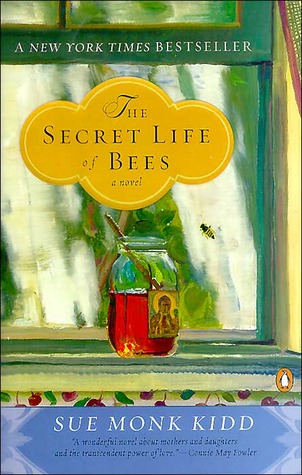
Set in South Carolina in 1964, The Secret Life of Bees tells the story of Lily Owens, whose life has been shaped around the blurred memory of the afternoon her mother was killed. When Lily's fierce-hearted black "stand-in mother," Rosaleen, insults three of the deepest racists in town, Lily decides to spring them both free. They escape to Tiburon, South Carolina--a town that holds the secret to her mother's past. Taken in by an eccentric trio of black beekeeping sisters, Lily is introduced to their mesmerizing world of bees and honey, and the Black Madonna. This is a remarkable novel about divine female power, a story women will share and pass on to their daughters for years to come.
Sunday, September 20, 2015
The sketeton road (2014) by Val McDermid
Before reading this novel, a primer on the Yugoslavian War (1991-2001) may be necessary. The author heavily relies on the events of this turbulent time as a backdrop for murder. A building inspector finds a skeleton in the turret of a Victorian Gothic building. A bullet had pieced the skull. Cold Case detective Karen Pirie used forensic science to determine the identity of the man. He was a Croatian general who left the Balkans to marry Maggie Blake, an Oxford professor of anthropology who met him while on studies in Serbia.
Research in the field and the was crimes tribunal reveals that he had committed the atrocity of killing over 40 people in retaliation for the deaths of his wife an sons. A mutual friend of Maggie and the general discovered the truth. Maggie had to find the truth, along with Detective Pririe, who experienced her own loss due to male aggression.
Research in the field and the was crimes tribunal reveals that he had committed the atrocity of killing over 40 people in retaliation for the deaths of his wife an sons. A mutual friend of Maggie and the general discovered the truth. Maggie had to find the truth, along with Detective Pririe, who experienced her own loss due to male aggression.
The murder of Harriet Krohn (2004 Eng trans 2014) by Karin Fossum
The narrative is told by the murderer, Charlo Trop, and it is from his letters and remembrances that the reader sees the self-absorption and hopelessness of Charlo's character. He is a compulsive gambler whose wife kept it all together, but with her death his behaviour deteriorates. Stealing from his job as a car salesman gets him fired. Then he borrows lots of money from friends, whom he does not repay. His 17 year old daughter does not trust him and is beginning to carve out her own life. He determines to rob a woman he knows from a coffee shop. The burglary goes band and in his inner conflict results in serious violence which kills her. With her money he tries to rehabilitate himself, paying off his debts and buying his daughter a horse. She begins to thaw and develop a new relationship with her father, but the long arm of the law is working overtime. Inspector Karl Sojer brings him in for questioning several times before an arrest is made. The myriad of lies Charlo tells seals his fate.
Subscribe to:
Posts (Atom)